
Ideas & placement
2 Small Tattoo Ideas for Men: Minimalist, Meaningful and Simple
The best small tattoos for men are designed for their size: one clear subject, readable contrast and enough space between lines. Explore small tattoo designs for men across the hand, neck, arm, forearm, chest, shoulder, back and wrist. Start with the size and placement guides, then preview a concept before discussing the final scale and quote with your tattoo artist.
Designs to start from
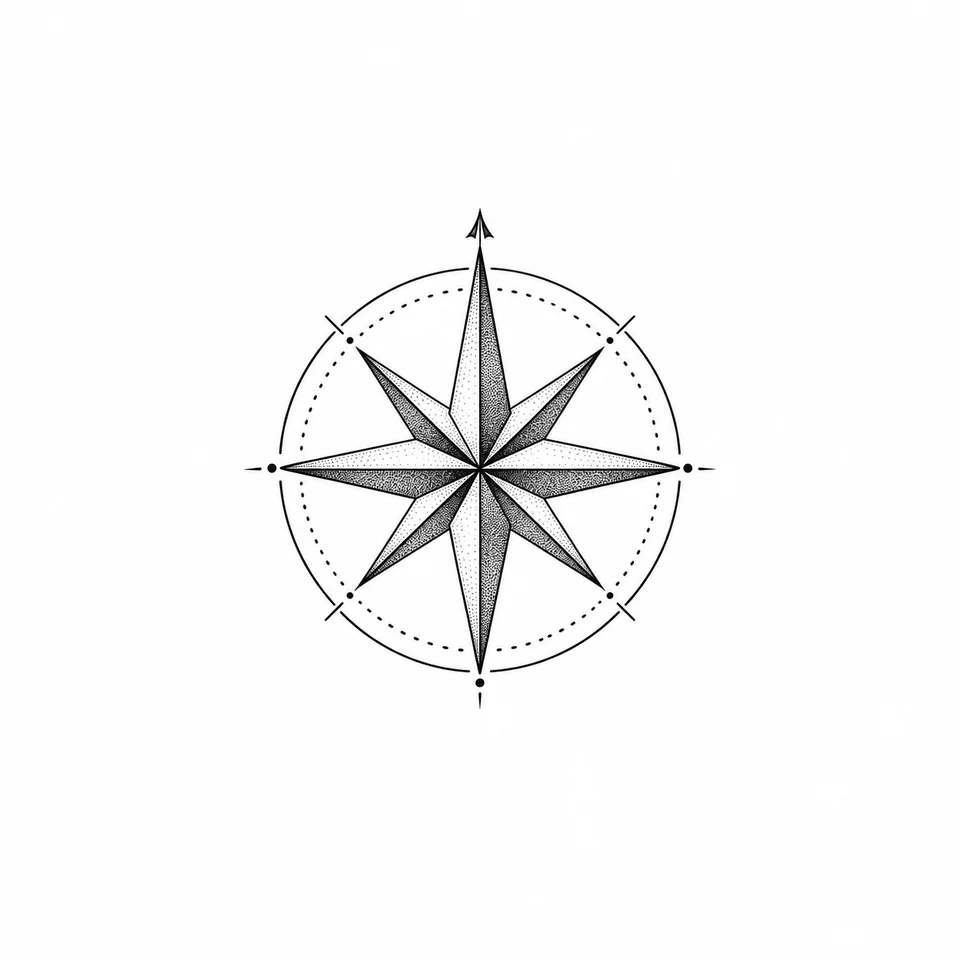
Compass point
Minimalist · Wrist / Forearm
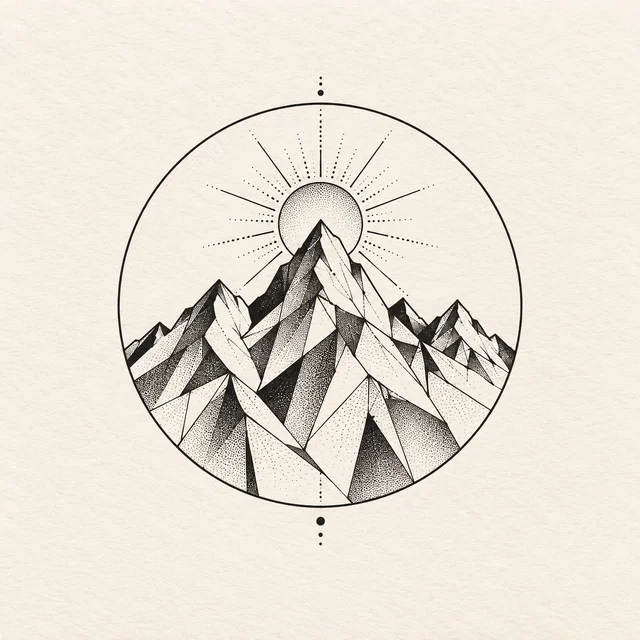
Somewhere above
Geometric · Forearm / Arm
Original concept artwork. Placement tags are suggestions, not photographs of healed tattoos. Preview a design or adapt it in the generator.
Small tattoo size, price and planning at a glance
A small tattoo is a compact composition, not a guaranteed measurement. An outline moon and a detailed compass can need different amounts of space even when both are called small. Print the design at actual size and view it from a normal conversational distance. If its subject disappears, simplify it or make it larger.
Budget depends on the studio minimum, location, artist, setup and drawing time, detail, color and number of sessions. These examples are design scales, not quotes. Ask the artist for the recommended finished size and a written estimate before booking. Healing and appointment planning should follow that artist's instructions rather than a fixed timetable from a picture gallery.
| Planning choice | What it changes | What to ask |
|---|---|---|
| Tiny single motif | Few marks and generous open space | What is the smallest readable version? |
| Small 1-2 inch concept | Useful starting scale for a simple icon, not all subjects | Will this detail stay clear at this size? |
| Larger detailed concept | More room for shading, lettering or multiple elements | Which details justify the extra size? |
| Budget and scheduling | Minimum fee, drawing time, tattoo time and sessions | What is included in the quote? |
Tiny vs small tattoos for men
Tiny tattoos for men work best when the entire idea fits in a few decisive marks: a crescent, an uncomplicated initial, a simple cross or a short branch. A tiny tattoo cannot carry the same visual information as a miniature painting. Extra whiskers, overlapping petals and tiny text usually demand more room.
Small tattoos can still use a clear silhouette with some internal detail. For little tattoos for men, choose which feature must survive at arm's length: the animal's shape, the direction of an arrow or the outline of a mountain. Remove secondary decoration before reducing that feature.
Small masculine tattoos: weight, balance and restraint
Masculine is a visual preference rather than a rule about who may wear a subject. If you want a firmer graphic feel, try a confident outline, grounded proportions and a small area of solid black. A flower or moon can feel just as direct as a wolf when the composition is controlled.
Minimalist small tattoo ideas for men often pair one subject with empty space. Avoid adding a border, lettering and a second symbol just to make the design feel stronger. Compare a fine-line version with a bolder outline at the same size, then choose the one you can read immediately.
Simple small tattoo designs: one subject, one focal point
An anchor with open internal gaps, a single mountain ridge, a clean arrow, a crescent moon and an olive branch offer useful starting shapes. A snake can work as a simple curve if you drop miniature scales. A compass can become a directional mark instead of a dial packed with lettering.
Simple means the design is easy to understand; it does not mean tattooing it requires little care. Straight lines, circles and symmetry expose small differences. Ask to see the artist's healed examples of similarly sized work, especially if you want thin lines or exact geometric spacing.
Small cross and Christian tattoo ideas
A plain cross, a cross with a short personal date, or an understated botanical element can express Christian faith without crowding a small area. Keep the cross silhouette clear. If you add a scripture reference, first test whether the characters can be read at the finished size.
Religious imagery has personal and community context. Choose the version that reflects your own practice and check any unfamiliar symbol before using it. Detailed portraits, long passages and several faith symbols together often belong in a larger composition; the small version can carry one meaningful element.
Compare small tattoo placements
Choose visibility and room for future work before choosing the exact spot. The forearm gives a long viewing area, the upper arm is easier to cover, and the chest can keep a small design private. Hand and neck placement makes even a small mark part of your everyday appearance.
Pain and how a tattoo settles vary between people and designs. The table offers relative planning considerations, not a pain forecast or medical advice. Use the anchors below to examine shape, movement and visibility for each area.
| Placement | Visibility | Design and comfort considerations |
|---|---|---|
| Hand | Usually visible | Frequent movement and exposure; simplify detail and discuss upkeep |
| Neck | Usually visible | Small curved surface; stencil orientation matters |
| Upper arm | Often easy to cover | Good space around a compact subject |
| Forearm | Visible with short sleeves | Useful for vertical motifs; compare inward and outward views |
| Chest | Usually covered by a shirt | Pec and sternum differ in contour and sensitivity |
| Shoulder | Depends on clothing | Round surface favors compact or curved designs |
| Back | Usually covered | Leave a deliberate border for future expansion |
| Wrist | Often visible | Creases and narrow space limit miniature text |
Small hand tattoos for men
Use the back of the hand to test a single strong shape, such as a small sun, an open leaf or a simple geometric mark. Finger designs occupy a different surface and should not be treated as a scaled-down version of a hand panel. Leave enough room between edges and internal lines.
Your hand moves and is seen from several angles all day. Try the concept with your fingers relaxed, then flexed. Discuss the exact location, expected settling and any future touch-up policy with an artist who has healed hand work to show. A tiny design is still a highly visible decision.
Small neck tattoos for men
A narrow branch, crescent or uncomplicated emblem can follow the side of the neck; a centered motif can use the nape. Decide whether the design should face forward, follow the jaw or align with the spine. Hair, collars and head movement change how the edges appear.
Use a placement preview to compare scale, then check the stencil standing upright and turning your head. Do not choose the smallest possible version simply because the neck feels conspicuous. An open, readable design can look quieter than cramped detail.
Small arm tattoos for men
The upper arm suits an isolated animal outline, branch, geometric mark or meaningful emblem with breathing room. Place a compact design so it feels intentional on the larger surface: centered on the outer arm, angled with a muscle contour, or held within a future sleeve plan.
Sleeve length is useful context. Test the spot with your usual clothing before finalizing it. If you may add tattoos later, leave pathways around the design rather than placing it where a future connecting element would need to cross it.
Small forearm tattoos for men
The forearm makes small tattoo designs for guys easy to see and revisit. A snake, stem, coordinate line or mountain ridge can follow its length without becoming a sleeve. A round emblem needs enough surrounding space to avoid appearing squeezed into the inner forearm.
Decide who the upright view is for: you looking down, or another person looking at your relaxed arm. Compare inside and outside placement while rotating the arm. For lettering, ask the artist to check spacing and direction on the stencil rather than judging a flat image alone.
Small chest tattoos for men
An upper-pec cross, a short coordinate line, a small animal or a compact compass can use the chest without becoming a full panel. Align the concept with the pec and leave a visible margin around it. Avoid squeezing a detailed drawing against the collarbone just to keep it hidden by a particular shirt.
A small chest tattoo and a full chest composition solve different design problems. Use the chest guide if you want a sternum-centered or expanding panel. For a single compact piece, compare left and right placement, how it sits at rest and whether it leaves room for a future larger composition.
Small shoulder tattoos for men
A circular symbol, crescent or curved botanical motif can echo the rounded shoulder. A small straight-edged icon can also work when it is placed deliberately on the front or rear shoulder rather than forced to wrap around the entire cap.
Raise and lower the arm when checking the stencil. The shoulder changes with movement, so a flat preview is only a starting point. If a chest or sleeve connection is likely later, think about its direction before committing to an isolated mark.
Small back tattoos for men
The shoulder blade, upper center back and a carefully chosen side position give compact designs different levels of symmetry. A vertical branch or emblem can align with the spine; a small animal may sit more naturally over one shoulder blade.
The back has much more room than a small tattoo needs. Make the surrounding space intentional, and consider whether this will remain a single piece or become the beginning of a larger back design. Ask the artist to show the stencil in a mirror or photograph at the actual scale.
Small wrist tattoos for men
A simple leaf, short initial, crescent or open geometric motif can fit the wrist when it respects the narrow surface. Keep the design away from becoming a band of tiny crowded detail, and compare its orientation with your hand relaxed.
Text that looks clear on a screen can become too dense at wrist scale. Print it, check every gap and ask what size the artist recommends. Watch straps, bracelets and creases are useful placement considerations to discuss before settling on the final position.
Meaningful small tattoos: build a personal connection
A compass can stand for a journey you took; an anchor can recall a person who supported you; a moon can mark a chapter of change. These are possible interpretations, not a universal tattoo dictionary. Your experience gives the subject its meaning.
For small tattoos for men with meaning, write one sentence explaining the connection. Keep the design focused on that sentence rather than combining every milestone into one icon. Dates, coordinates and initials can add specificity, but they should be checked carefully and kept readable.
Tattoo Meanings: Turn a Symbol into Your Own StoryWords, initials and coordinates in small tattoos
Choose a short phrase or a few characters before choosing an ornate font. Narrow letter counters, close spacing and long lines make small text harder to read. A plain type style with a little extra space may serve the meaning better than elaborate miniature lettering.
Verify names, accents, dates, coordinate format and translations against a reliable source. Ask the artist for a stencil at the recommended size. If the phrase only works when you enlarge the phone screen, shorten it or allocate more skin.
From concept to a tattoo-ready design
Bring one or two references and explain what you like: the open silhouette, a particular line weight or the balance of black and empty space. Our artwork and generated images are concepts. A tattoo artist should adapt the anatomy, scale and details and prepare the stencil.
Compare healed portfolio examples rather than relying only on fresh close-up photographs. Confirm the finished dimensions, placement, quote, session plan and any touch-up terms. Before the appointment proceeds, view the stencil standing naturally and check its orientation, spelling and proportions.
Keeping a small tattoo readable over time
Small details depend on space and contrast. Choose a design with separated lines and avoid forcing dense shading or very fine lettering into a tiny area. Your artist can explain how their own healed work changes and whether a bolder version is more suitable.
Follow the aftercare instructions provided for your tattoo and ask the studio about questions during healing. Once healed, discuss sun exposure and routine skin care with the artist. A placement preview cannot predict fading, healing or how a particular line will age.
Your next step: a clear design brief
- Choose one subject and say what it means to you.
- Compare the concept at its intended size.
- Preview a location and check everyday visibility.
- Let your artist adapt the anatomy, spacing and stencil.
Questions before your tattoo
What are some good small tattoos for men?
Consider an anchor for a clear silhouette, a simplified snake for movement, a plain cross for faith, an open compass for direction, coordinates for a personal place, a crescent for a compact curve, a mountain ridge for a landscape memory, an olive branch for a botanical line, a star for a simple emblem, or an initial for a personal connection. Choose the version with enough open space at the intended size.
How small is a $100 tattoo?
A $100 budget does not correspond to a universal size. A studio minimum may use most or all of that amount before complexity is considered. A simple 1-2 inch motif can be a useful size to discuss, but it is not a $100 quote. Ask a local artist what that budget covers, which dimensions they recommend and whether drawing or touch-ups are included.
What is the 1/3 rule tattoo?
In some tattoo design discussions, the 1/3 rule describes an approximate balance of one-third dark areas, one-third middle tones and one-third open or light space in a black-and-gray composition. It is a compositional heuristic, not a mandatory technical standard or a tattoo meaning. A tiny outline design may need a different balance; use it as a prompt to discuss contrast with your artist.
What are the top 10 tattoos for men?
There is no single verified top-ten ranking. Ten starting points to compare are: 1. wolf, 2. lion, 3. snake, 4. compass, 5. cross, 6. anchor, 7. mountain, 8. rose, 9. dragon and 10. geometric symbol. For a small tattoo, reduce the subject to its clearest feature rather than shrinking a detailed large design.
How much does a small tattoo cost?
The price depends on the studio minimum, artist, location, drawing time, detail, color and tattooing time. Small does not automatically mean cheap: fine lettering or precise geometry may take careful setup. Preview the size and placement, then request a written local quote with the recommended dimensions and what the price includes.
Where should a small tattoo go?
Start with the upper arm or forearm when you want room for a readable subject; consider the chest or back when coverage matters. The wrist is narrow, and the hand and neck remain more visible in daily life. Compare the placement table and anchors, then ask the artist to assess the exact shape, motion and sensitivity of your chosen spot.
Do small tattoos fade faster than large ones?
Size alone does not determine fading. Very fine lines, crowded detail, little open space, placement, exposure and individual skin can affect how clearly a tattoo reads over time. Choose separated details, look at healed work from the artist and follow their aftercare guidance. The preview is not a prediction of long-term appearance.
What's the best small tattoo for a first-timer?
Choose one simple subject with a strong silhouette, comfortable visibility for your everyday life and a meaning or appearance you still enjoy after some time. A small branch, mountain outline or plain emblem can be starting points. Ask the artist for a readable size rather than insisting on the tiniest possible version.
Keep exploring
Chest Tattoo Ideas for Men: Bold and Built for Your Frame
Explore chest tattoos for men, from upper-pec and sternum designs to half and full panels, with style, size, pain and budget planning plus placement previews.
Explore the guide
Masculine Tattoo Ideas: Find a Theme That Feels Like You
Explore masculine tattoo ideas and tattoo themes for men, from bold animals and geometry to botanical designs, with practical scale and placement planning.
Explore the guide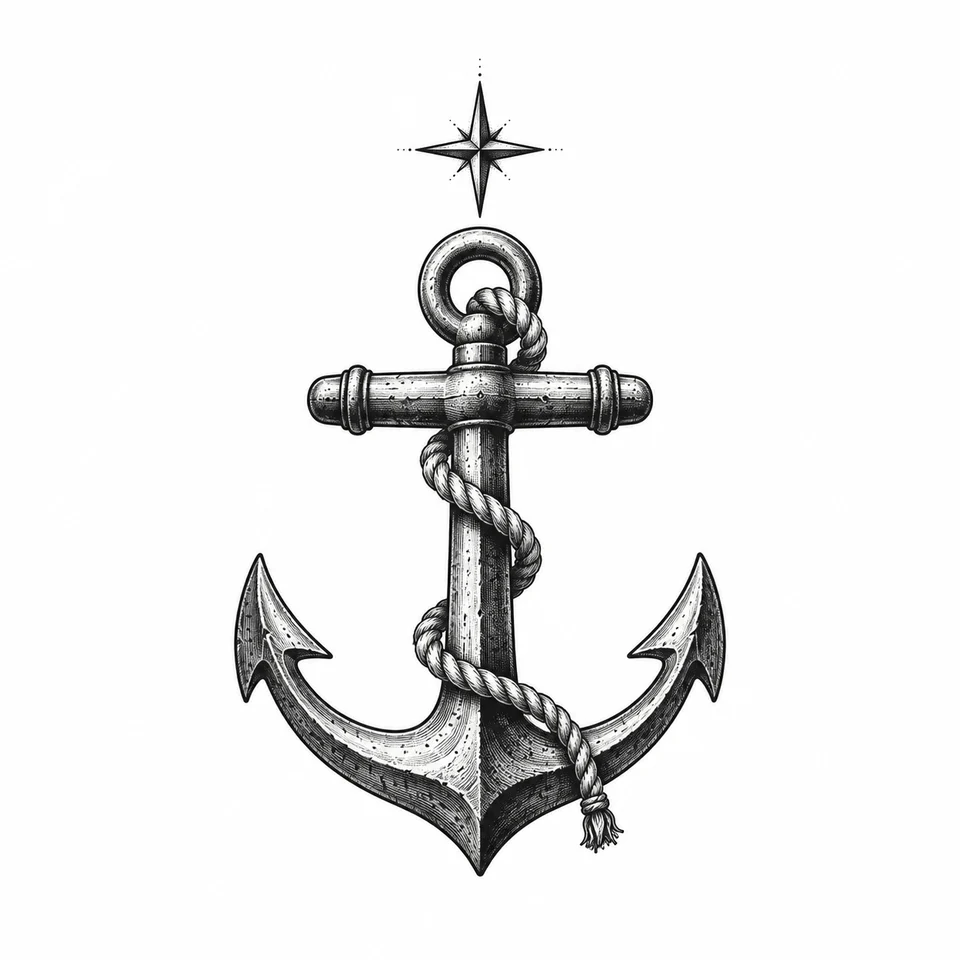
Tattoo Meanings: Turn a Symbol into Your Own Story
Explore tattoo symbols and meanings through personal context, flowers, animals, faith, words and dates, then build a meaningful design brief.
Explore the guide