
Meaning guide
Tattoo Meanings: Turn a Symbol into Your Own Story
A meaningful tattoo begins with your connection to the image, not a universal definition copied from a list. A symbol can have personal, cultural and religious contexts that overlap or differ. Use this guide to compare possible interpretations, check what needs research and turn your story into a design with one clear visual idea.
Visual starting points for a meaningful tattoo
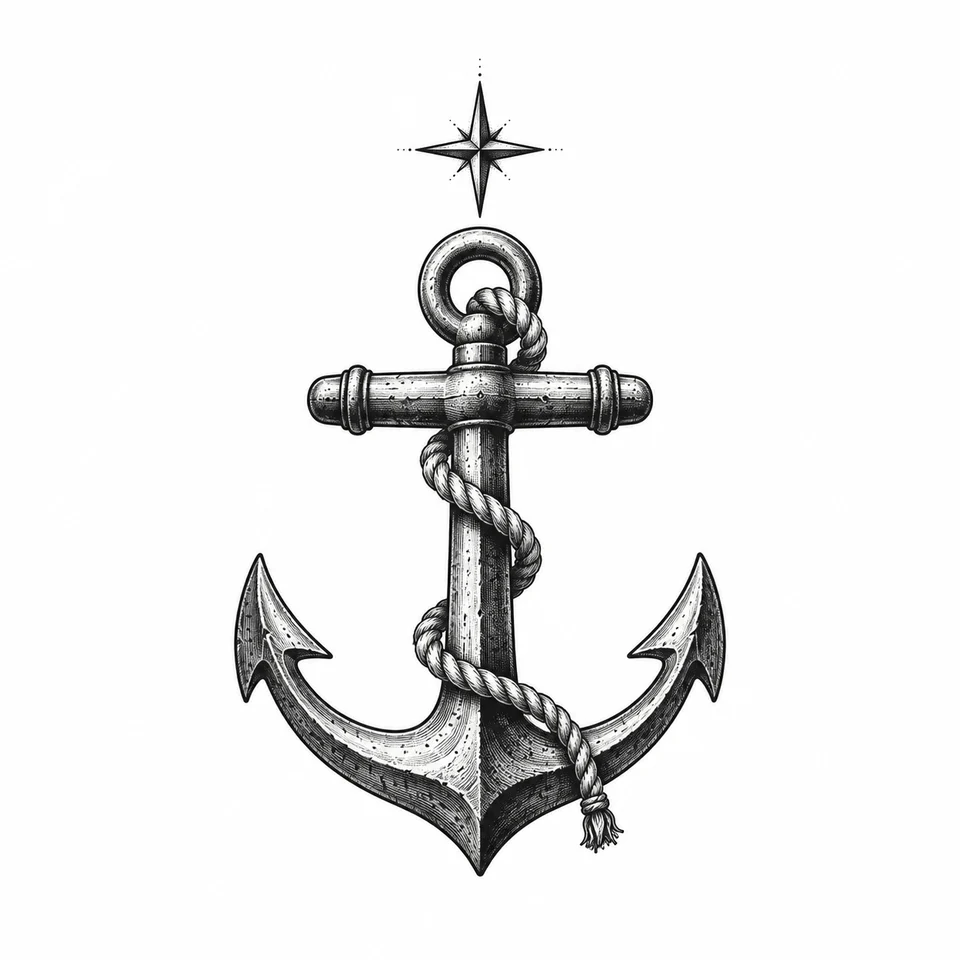
Anchor and star
Traditional · Forearm / Arm
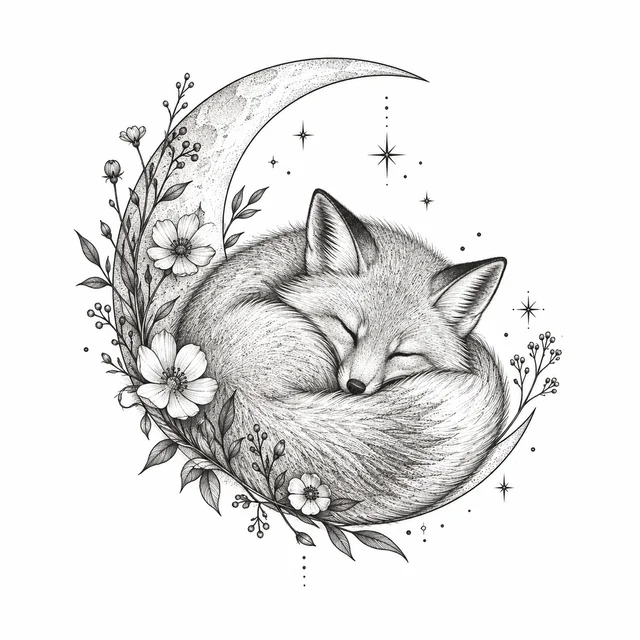
Moonlit fox
Fine line · Forearm / Arm
These original concepts show possible subjects, not universal symbol definitions. Your personal context gives the design its meaning.
Personal meaning is the starting point
A mountain might recall a specific trip, a flower might bring back a family garden and a moth might simply be an animal you have always liked. Those connections do not need to match a popular symbolism list to be meaningful. Write the event, person or value in plain language first.
Ask whether you want the meaning readable to other people or mainly known to you. A literal date or place can be specific, while an abstract shape can keep the story private. That choice affects how much explanation belongs in the design.
Tattoo symbols and possible interpretations
An anchor can suggest steadiness, a compass can suggest direction and a moon can suggest cycles or a nighttime memory. These are possible design interpretations, not universal definitions. The same symbol may carry a different meaning in another setting or for another wearer.
Make the association specific: which journey, whose support, what period of life? A personal detail can help, but it should not make a small design unreadable. Choose one connection rather than combining every meaning you find.
| Motif | Possible personal reading | Question for your own brief |
|---|---|---|
| Compass | Direction, a journey or a place | Which route or decision does it mark? |
| Anchor | Support or steadiness | Who or what keeps you grounded? |
| Moon | A cycle, night or a memory | What specific chapter does it recall? |
| Mountain | A place, challenge or landscape | Is there a particular ridge or trip? |
| Olive branch | A botanical memory or hoped-for peace | What is your own connection to the plant? |
Flowers and animals: make the subject specific
A rose, peony or branch can refer to a plant you know rather than an abstract value. An animal can connect to a lived experience, an admired quality or a visual preference. The interpretation becomes stronger when you can explain why that particular subject matters to you.
If a real species, pet or flower is central to the story, bring accurate references. Decide which feature must remain recognizable at the planned size. A simple silhouette can preserve the subject more clearly than a crowded miniature portrait.
Research religious and cultural context
Some symbols belong to living religious or cultural practices, and a visual resemblance does not make them interchangeable. Before using an unfamiliar emblem, learn its specific context from relevant reliable sources and ask an appropriately experienced artist. Do not assume a generic symbol list provides authority.
For your own faith or tradition, explain the practice and intended reference. For a design chosen mainly for its shape, consider an original abstract composition instead of copying a culturally specific mark you do not understand. The meaning should be deliberate, not an accidental claim.
Words, dates and coordinates need checking
A short quotation, initial, meaningful date or set of coordinates can make a tattoo personal. Check spelling, accents, calendar format, coordinate order and translations before designing around them. Confirm the source of a quotation if attribution matters.
Then test the text at actual size. An important phrase that becomes cramped loses both clarity and emphasis. Shorten it, use a clearer letter style or give it more room. Keep private information in mind when choosing coordinates or details you will display publicly.
Turn the story into one visual idea
Write a one-sentence brief: a specific subject connected to a specific memory or value. Add the visual preference, proposed placement and approximate scale. Use supporting details only when they reinforce that sentence. More symbols do not automatically make a tattoo more meaningful.
Try several concept directions before choosing one. Compare a literal version, a simple symbolic version and a more abstract version. A placement preview helps with proportions; your tattoo artist should adapt the final anatomy, line spacing and stencil.
A meaningful tattoo checklist before the stencil
Check four things: the personal connection, the accuracy of every word or number, the context of unfamiliar symbols and readability at the finished size. If you cannot verify an element, leave it out until you can. A design can remain meaningful while being visually simple.
Give yourself time to revisit the idea in everyday life. Before tattooing, review the stencil for spelling, orientation and proportion and ask the artist to confirm the practical design choices. Our concepts are references for that conversation, not a guarantee of meaning or a tattoo-ready stencil.
Your next step: a clear design brief
- Choose one subject and say what it means to you.
- Compare the concept at its intended size.
- Preview a location and check everyday visibility.
- Let your artist adapt the anatomy, spacing and stencil.
Questions before your tattoo
How do I choose a tattoo with meaning?
Start with a person, memory, place or value and write why it matters in one sentence. Choose one subject that connects to that story. Add style and placement after the connection is clear, and keep secondary details readable.
Do tattoo symbols have universal meanings?
Usually not. A symbol can have personal, cultural, religious or historical interpretations that differ by context. Treat general symbolism lists as starting ideas and check the specific tradition when it matters to the design.
What are some meaningful small tattoo ideas?
An initial, a checked personal date, a simplified flower from a familiar place, a mountain ridge or a compact emblem can carry a specific connection. Keep the design focused on one story and ask the artist what scale the details need.
What do animal tattoos mean?
An animal may express a personal memory, an admired quality or simply an interest in the animal. A wolf, moth or lion does not have one guaranteed meaning for every wearer. Tell the artist which interpretation and visual features matter to you.
Should I add words to explain the meaning?
Only if the words improve the design and remain readable. The meaning can be known just to you. A short initial or date may be enough; long text may need a separate, larger composition.
Can an AI tattoo design express my story?
It can help you explore visual directions from a clear description. You should check symbols, spelling, dates and cultural context yourself, then work with an artist to turn the concept into a suitable final tattoo design.
Keep exploring
Small Tattoo Ideas for Men: Minimalist, Meaningful and Simple
Explore small tattoo ideas for men by style and placement, with tiny vs small designs, meaningful symbols, size and cost guidance, and placement previews.
Explore the guide
Masculine Tattoo Ideas: Find a Theme That Feels Like You
Explore masculine tattoo ideas and tattoo themes for men, from bold animals and geometry to botanical designs, with practical scale and placement planning.
Explore the guide
Floral Tattoo Ideas for Men: Shape, Contrast and Personal Meaning
Explore floral tattoos for men with roses, peonies and olive branches, from fine-line stems to bold botanical designs, plus placement and meaning ideas.
Explore the guide
Gothic Tattoos: Dark Imagery with a Clear Design
Explore gothic tattoos with ravens, moths, daggers, botanical forms and architectural shapes, plus blackwork, lettering and placement guidance.
Explore the guide