
Ideas & placement
3 Gothic Tattoos: Dark Imagery with a Clear Design
Gothic tattoos can use darkness, ornament and dramatic shapes without losing readability. A raven, moth, dagger or pointed architectural frame may give a design its mood, while open space keeps the subject clear. Choose which part of the style appeals to you - the silhouette, lettering or atmosphere - then build a composition around it.
Designs to start from
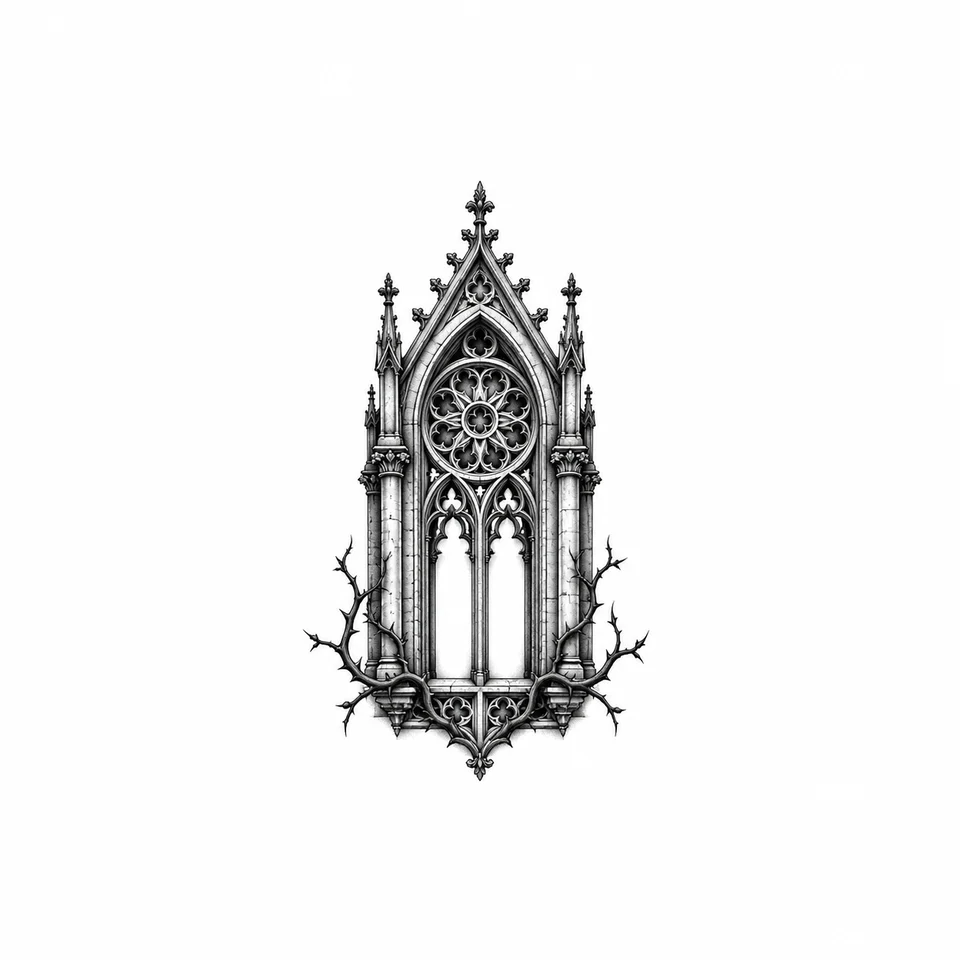
Cathedral thorns
Blackwork · Forearm / Arm
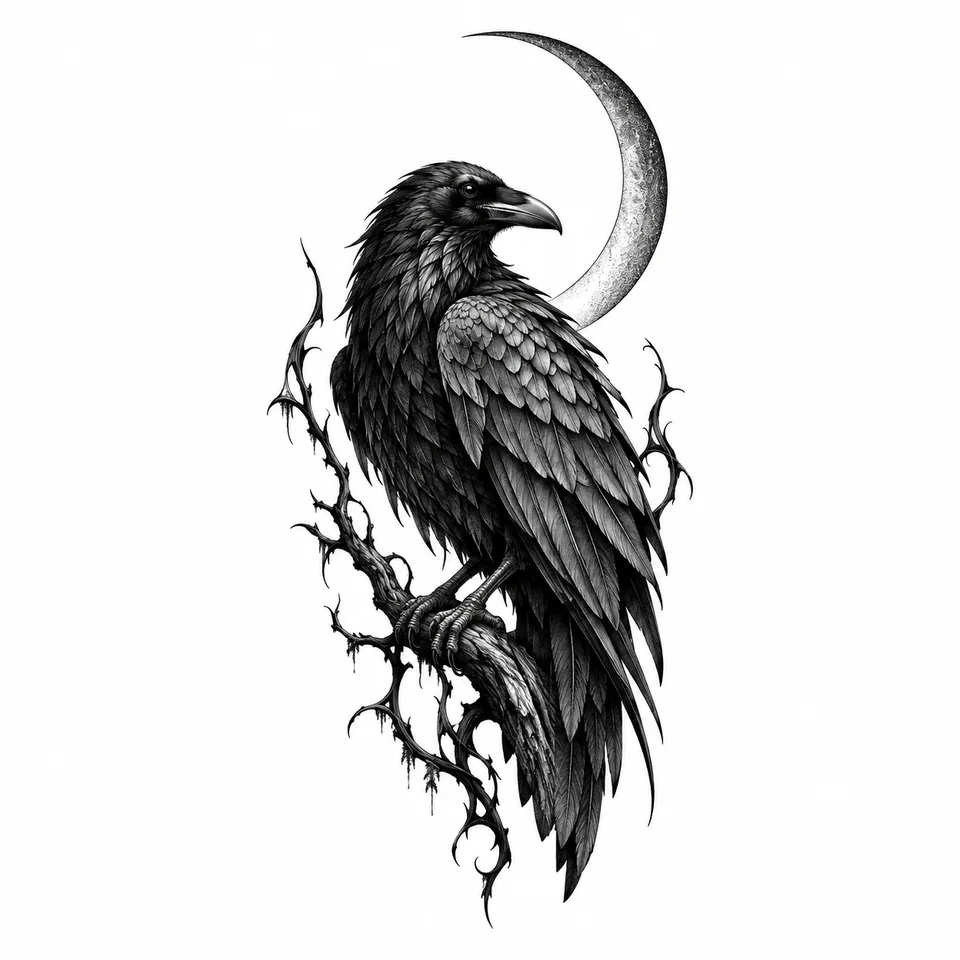
Gothic raven
Blackwork · Chest / Back
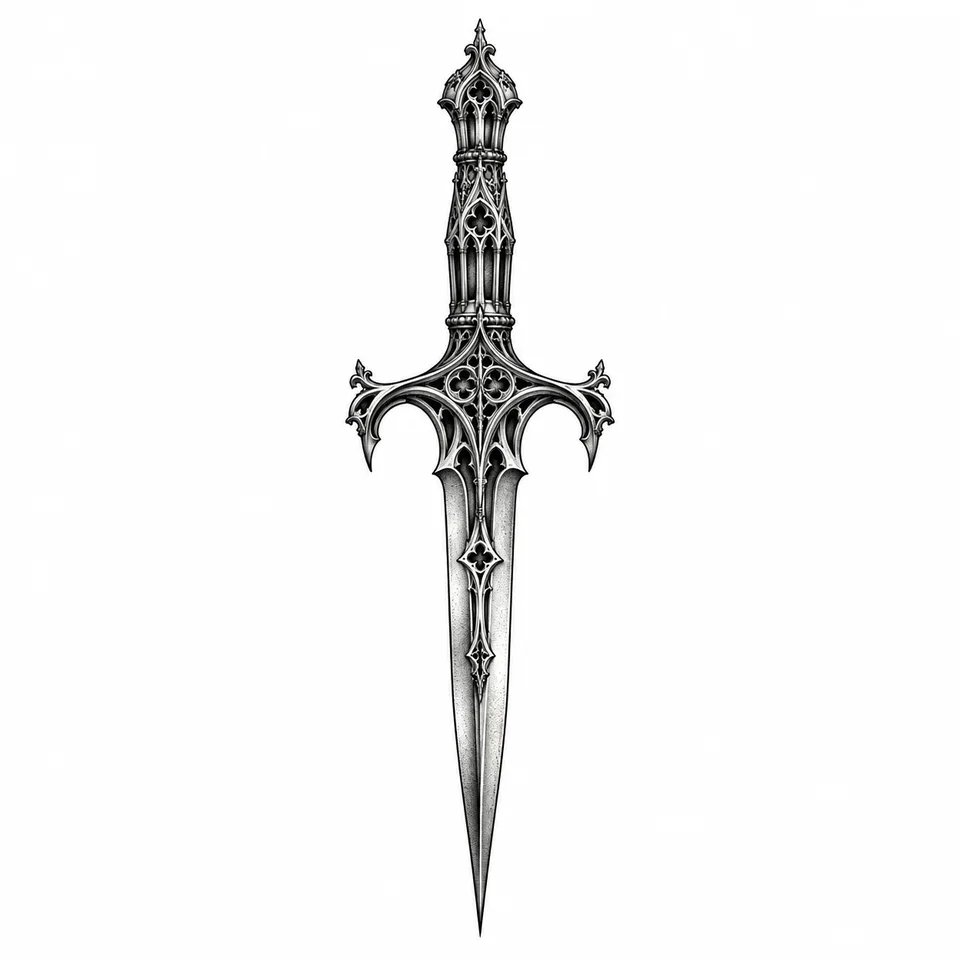
Architectural dagger
Blackwork · Forearm / Arm
Original concept artwork. Placement tags are suggestions, not photographs of healed tattoos. Preview a design or adapt it in the generator.
Define the gothic mood before choosing motifs
Gothic can describe several visual directions: pointed architectural forms, dark romantic florals, blackletter, stark blackwork or uncanny animal imagery. They are not interchangeable. Pick a few references and identify whether you like their shape, contrast or emotional atmosphere.
A single raven with a sharp outline can create a dark mood more effectively than several unrelated symbols. Make one visual decision lead the design. The other elements should support it rather than create a catalog of everything associated with gothic style.
Ravens, moths, daggers and dark florals
A raven offers a strong wing or perched silhouette. A moth naturally gives a symmetrical shape with room for ornamental patterns. A dagger introduces a clear vertical axis. A dark rose or thorned branch can soften a rigid frame while keeping the overall composition dramatic.
Combine motifs by their shapes as well as their possible meaning. A dagger and stem can share a long direction; a moth can sit in a pointed frame. If every motif demands equal attention, remove one before adding more shading.
Use blackwork and negative space deliberately
Large black areas need clear edges and separation from adjacent details. Open channels around a raven wing or moth pattern can make the shape readable without relying on a dense background. Compare the drawing as a solid silhouette before refining its texture.
Very dark imagery does not need to cover every part of the tattoo. Leave enough light space to distinguish the main subject. Your artist can adjust black coverage, line spacing and scale based on healed examples of their own work.
Gothic lettering: readability comes first
Blackletter and ornate lettering can become the main image, especially for a short word or initial. Decorative strokes, tightly spaced letters and small internal gaps make long phrases harder to read at a modest size. Test the actual wording rather than a sample font name.
Check spelling, accent marks and any unfamiliar language before the stencil. If the lettering is supporting a raven or floral subject, give it a distinct area of the composition. Do not hide an important sentence inside a busy pattern.
Match gothic shapes to the body
A dagger, arch or narrow botanical form can follow the forearm or thigh. A moth, paired wings or broad frame can use the chest or upper back. Small gothic tattoos work best when they keep the silhouette and reduce the interior texture.
Decide how much darkness you want visible with your everyday clothing. Check the stencil in a relaxed posture and compare different widths. A tall design forced into a short space may lose the pointed rhythm that attracted you to it.
Build an original gothic tattoo brief
Describe the main subject, mood, amount of black, placement and details to avoid. For example, ask for an open raven silhouette with one botanical accent rather than a densely shaded background with several miniature symbols. The constraint helps the concept stay focused.
Our concepts are starting references. An artist should adapt them into tattooable linework and assess cultural or religious imagery when relevant. Personal interpretation is welcome, but an unfamiliar emblem should be researched rather than treated as a universal symbol of darkness.
Your next step: a clear design brief
- Choose one subject and say what it means to you.
- Compare the concept at its intended size.
- Preview a location and check everyday visibility.
- Let your artist adapt the anatomy, spacing and stencil.
Questions before your tattoo
What makes a tattoo gothic?
Gothic tattoos commonly use dark dramatic imagery, ornament, pointed forms, blackletter or strong blackwork. There is no single required motif. The shared mood and composition are more important than adding many dark symbols.
What are good gothic tattoo motifs?
A raven, moth, dagger, thorned rose, pointed frame or restrained dark botanical composition can be useful starting points. Choose the silhouette that suits the placement and use supporting details sparingly.
Can a gothic tattoo be small?
Yes. A simple raven outline, tiny dagger or open moth shape can retain the mood at a compact size. Detailed architectural ornament and dense blackletter usually need more space; ask the artist which features should be simplified.
Do gothic tattoos have to be all black?
No. Blackwork is one option, while restrained color accents or black-and-gray shading can also fit the mood. Decide which part should draw attention before choosing a color scheme.
What do raven or moth tattoos mean?
They may express a personal connection to change, night, remembrance or simply the animal itself. These interpretations vary and are not universal cultural definitions. Choose a meaning that reflects your own story and check any specific tradition separately.
How do I keep gothic lettering readable?
Use a short phrase, adequate letter size and open spacing. Print the actual text at the planned scale and check every letter. Have the artist refine the font and stencil instead of relying on a tiny screen rendering.
Keep exploring
Masculine Tattoo Ideas: Find a Theme That Feels Like You
Explore masculine tattoo ideas and tattoo themes for men, from bold animals and geometry to botanical designs, with practical scale and placement planning.
Explore the guide
Floral Tattoo Ideas for Men: Shape, Contrast and Personal Meaning
Explore floral tattoos for men with roses, peonies and olive branches, from fine-line stems to bold botanical designs, plus placement and meaning ideas.
Explore the guide
Tattoo Meanings: Turn a Symbol into Your Own Story
Explore tattoo symbols and meanings through personal context, flowers, animals, faith, words and dates, then build a meaningful design brief.
Explore the guide