
Ideas & placement
3 Floral Tattoo Ideas for Men: Shape, Contrast and Personal Meaning
Floral tattoos for men can be quiet, graphic or richly detailed. A rose gives a compact layered shape, a peony gives a broad bloom, and an olive branch creates a clear flowing line. Choose the plant for a personal connection or the way its shape fits your body, then decide how much detail the finished size can support.
Designs to start from
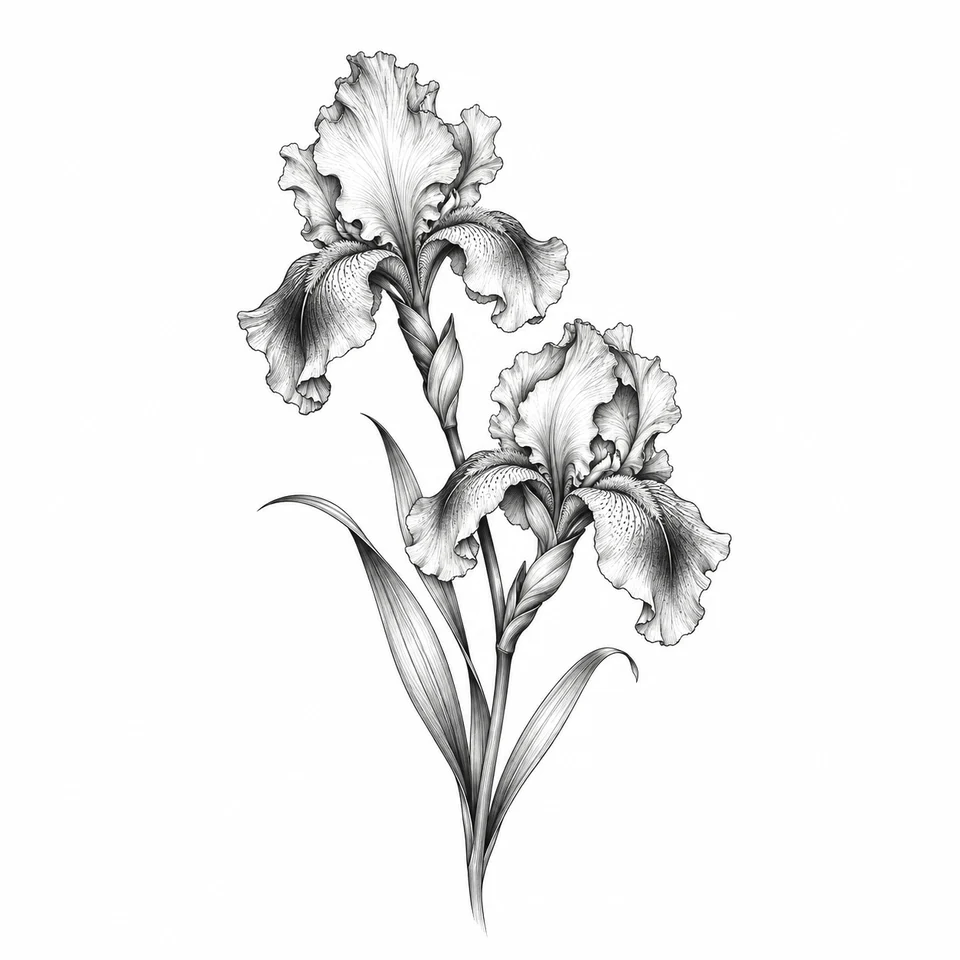
Iris in ink
Fine line · Arm / Forearm
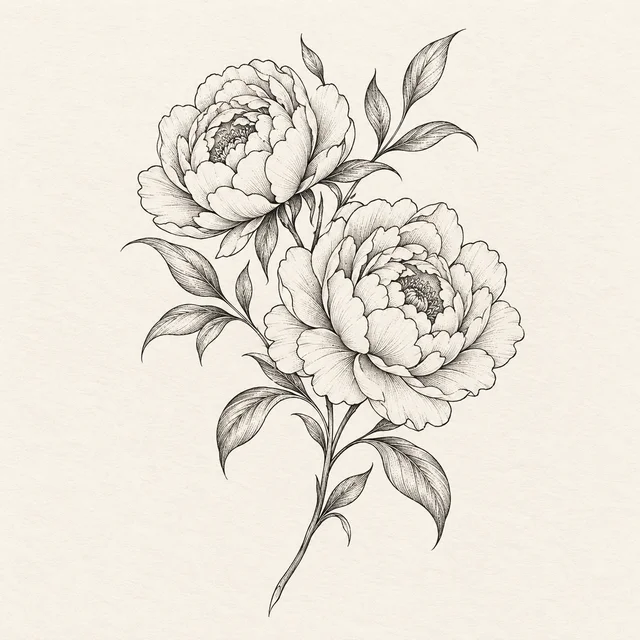
Peonies in bloom
Fine line · Arm / Forearm
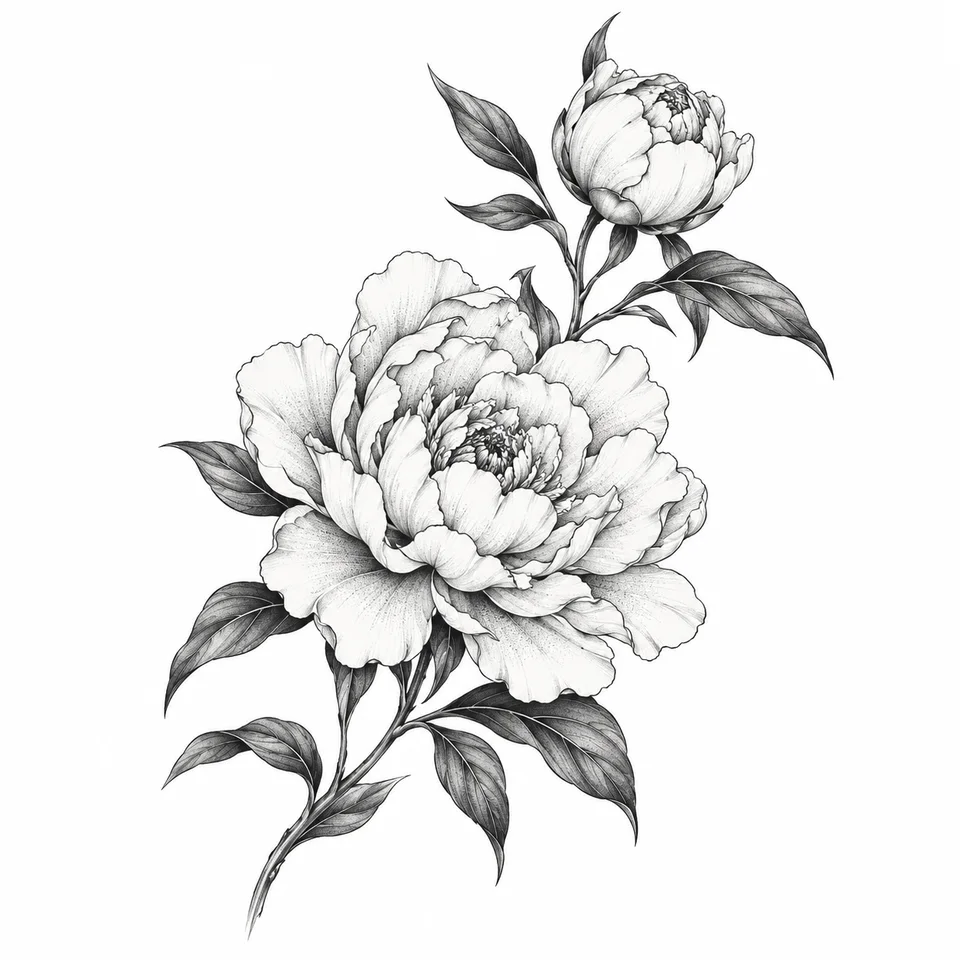
Flowing peony branch
Fine line · Chest / Back
Original concept artwork. Placement tags are suggestions, not photographs of healed tattoos. Preview a design or adapt it in the generator.
Find your botanical direction
Start by choosing between a single bloom, a branch, a stem or a larger botanical composition. These shapes create different rhythms: a flower is a focal point, a branch can follow the body, and a group of blooms needs a clear hierarchy. Masculine floral tattoo ideas can use any of these approaches.
Visual weight comes from the outline, dark areas and spacing rather than the gender assigned to the plant. Compare a fine-line stem with a bold blackwork version. Keep the one whose shape feels right at the placement and size you want.
Roses, peonies and branches: what changes?
A rose has layered petals that can be simplified into a compact silhouette. A peony offers a larger open bloom but needs room between overlapping petals. An olive branch can use a longer direction and more open space. A specific wildflower can make the design personal if it connects to a place or memory.
Use a real botanical reference when the species matters. Names and symbolic associations vary by context; do not assume a flower has one universal meaning. Tell the artist which plant features you want preserved and which may be stylized.
| Subject | Shape to plan around | Detail to protect |
|---|---|---|
| Rose | Compact layered bloom | Clear separation between petal groups |
| Peony | Broad open flower | Enough space for overlapping petals |
| Olive branch | Long stem and repeated leaves | Distinct leaf shapes and open gaps |
| Personal wildflower | Species-specific form | The feature that makes the plant recognizable |
Fine line or bold botanical work?
Fine-line concepts can feel airy when petals and leaves have separated edges. Bolder outlines or blackwork can make the same plant more graphic. Neither choice solves overcrowding: a flower with many overlapping marks still needs an appropriate finished size.
Look at healed work from the artist whose technique you want. Compare the bloom at actual dimensions, not only a magnified image. Ask which small petal folds or leaf veins should be dropped to keep the plant readable.
Place the plant by its growth direction
A stem can follow the forearm, upper arm or thigh. A broad bloom can use the shoulder or pec, while a larger arrangement can follow the back. Rotate the plant to see whether it moves with the body or feels like a sticker applied across it.
Decide where the main flower should be seen and how much of the stem wraps away. Leave margins around leaves and petals near the edges. If a sleeve is likely, the plant can provide a connecting direction without covering every open area now.
Pair flowers with one supporting element
A rose and dagger can share a strong vertical direction; a moth and botanical sprigs can balance a symmetrical shape; a flower and personal date can keep remembrance specific. Pairings work best when one subject stays visually dominant.
Avoid placing tiny words inside detailed petals or adding several symbolic objects with equal weight. Explain the relationship in one sentence. If the artist needs a paragraph to understand how every element connects, the composition may benefit from simplification.
Write a floral tattoo brief that an artist can use
Name the plant, main view of the flower, preferred line weight, amount of shading and proposed placement. If the species or memory matters, bring a reference and explain it. Ask for open spacing rather than an exact miniature copy of every petal.
Use the concepts here to compare directions. A generator can help you explore a flower-and-moth arrangement or a restrained branch, but your tattoo artist should adapt the botanical details, scale and stencil to the final body area.
Your next step: a clear design brief
- Choose one subject and say what it means to you.
- Compare the concept at its intended size.
- Preview a location and check everyday visibility.
- Let your artist adapt the anatomy, spacing and stencil.
Questions before your tattoo
Can men get floral tattoos?
Yes. Floral subjects are not limited by gender. A plant can reflect a memory, place, person or visual preference; line weight, contrast and placement determine the look more than the subject label.
What flowers work well in tattoos for men?
Roses, peonies, olive branches and personally meaningful wildflowers are useful starting points. Choose the shape and plant you like, then simplify details for the final size rather than choosing only by symbolic lists.
What does a floral tattoo mean?
Meaning depends on the plant, your context and your interpretation. A flower might recall a person, season or place, or simply be a subject you enjoy. Cultural associations should be checked in their specific context instead of treated as universal.
Can a floral tattoo be small?
A simple branch or simplified bloom can be compact. Dense layered flowers need more room between petals. Ask the artist which species features can remain readable at your intended size.
Where should a floral tattoo go?
Long stems can follow the forearm or thigh, broad blooms can use the shoulder or pec, and larger arrangements can use the back. Test the growth direction and where the main bloom will be visible.
Should I choose fine line or blackwork for a flower?
Choose fine line for open, airy shapes or blackwork for stronger graphic weight, if the artist has relevant healed examples. In both styles, adequate spacing and suitable scale are essential to a readable design.
Keep exploring
Small Tattoo Ideas for Men: Minimalist, Meaningful and Simple
Explore small tattoo ideas for men by style and placement, with tiny vs small designs, meaningful symbols, size and cost guidance, and placement previews.
Explore the guide
Thigh Tattoo Ideas for Men: Give the Design Room to Move
Explore thigh tattoos for men across front, outer and inner placement, with bold animals, geometric and botanical ideas plus scale and session planning.
Explore the guide
Gothic Tattoos: Dark Imagery with a Clear Design
Explore gothic tattoos with ravens, moths, daggers, botanical forms and architectural shapes, plus blackwork, lettering and placement guidance.
Explore the guide
Tattoo Meanings: Turn a Symbol into Your Own Story
Explore tattoo symbols and meanings through personal context, flowers, animals, faith, words and dates, then build a meaningful design brief.
Explore the guide